Resist Salt Manufacturer in India | Exporter & Supplier for Bangladesh Textile Industry
Resist Salt is one of the most important specialty chemicals used in the textile dyeing and printing industry. It plays a vital role in ensuring uniform dye absorption, preventing unwanted oxidation, and producing vibrant, long-lasting colors on fabrics. Textile manufacturers across Bangladesh, India, Pakistan, Vietnam, Turkey, and other major textile-producing countries rely on high-quality Resist Salt to improve production efficiency and maintain international quality standards.
India has emerged as one of the world's leading manufacturers and exporters of textile chemicals, including Resist Salt. With advanced manufacturing facilities, competitive pricing, consistent product quality, and strong export infrastructure, Indian suppliers have become preferred partners for textile mills worldwide. Bangladesh, being one of the largest garment and textile exporters globally, imports significant quantities of textile auxiliaries and dyeing chemicals from India every year.
If you are searching for a trusted Resist Salt Manufacturer in India, reliable Resist Salt Exporter, or experienced Resist Salt Supplier for Bangladesh, understanding the product, its applications, specifications, and sourcing advantages is essential. This guide covers everything international buyers need to know before purchasing Resist Salt in bulk.
What is Resist Salt?
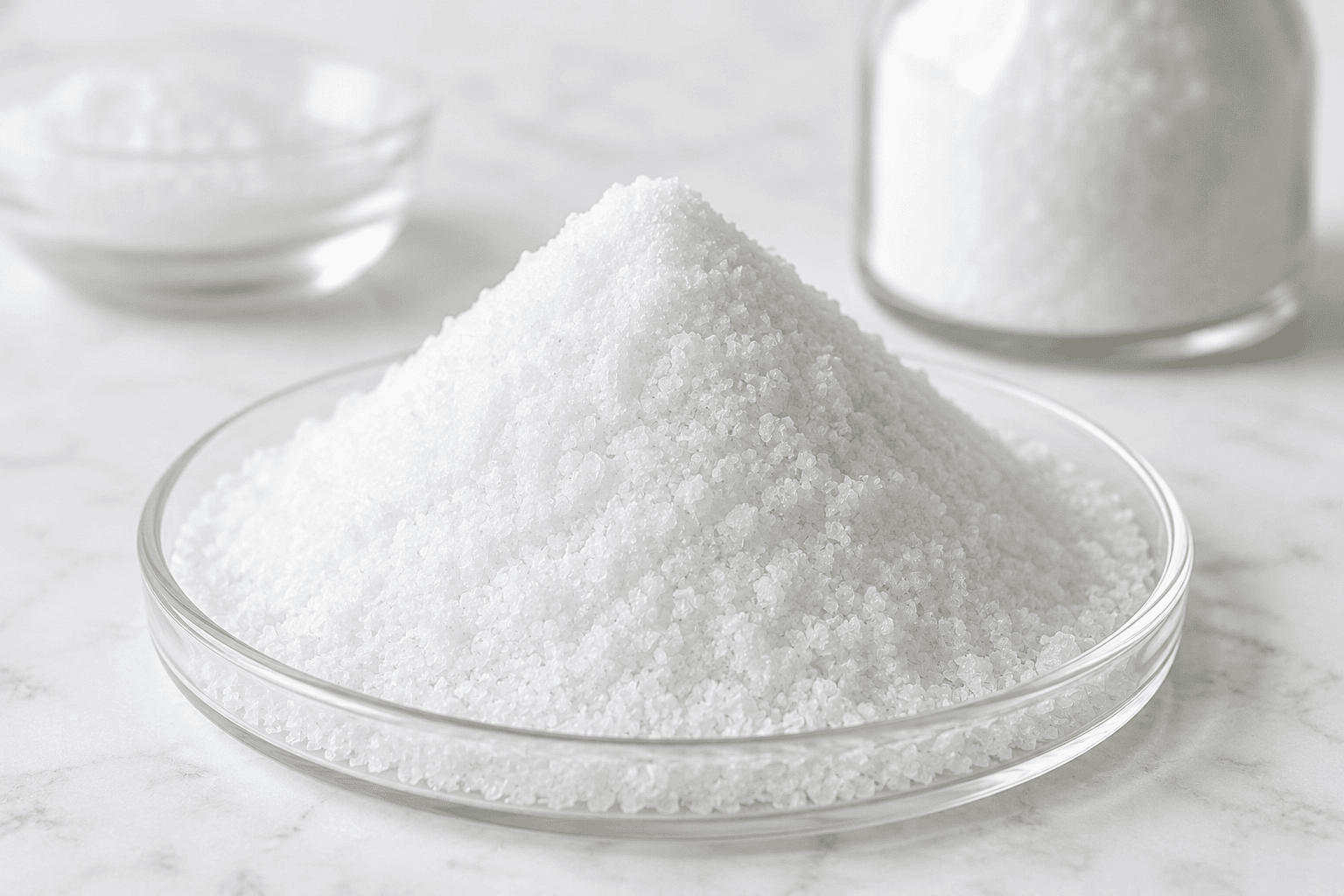
Resist Salt is a specialty oxidizing chemical widely used during reactive dyeing and textile printing processes. Chemically known as Sodium Meta Nitro Benzene Sulphonate (SMBS), Resist Salt acts as an oxidizing agent that prevents reduction of dyes during textile processing. This ensures brighter shades, excellent color fastness, uniform dye penetration, and consistent production quality.
During textile dyeing, reducing agents generated in the dye bath can negatively affect reactive dyes and printing colors. Resist Salt neutralizes these reducing agents and protects dye molecules from degradation, allowing manufacturers to achieve superior color consistency and higher production efficiency.
Because of its excellent chemical stability and compatibility with reactive dyes, Resist Salt has become an indispensable chemical for textile processing industries worldwide.
Chemical Information of Resist Salt
- Chemical Name: Sodium Meta Nitro Benzene Sulphonate
- Common Name: Resist Salt
- CAS Number: 127-68-4
- Molecular Formula: C6H4NNaO5S
- Appearance: Yellow crystalline powder
- Solubility: Completely soluble in water
- Nature: Oxidizing Agent
- Application: Textile Dyeing & Printing
- Purity: Available in Industrial Grade
Its excellent oxidation characteristics make Resist Salt highly effective in preventing dye reduction during the printing and dyeing process, especially when sulfur-containing reducing agents are present.
Why Resist Salt is Important in Textile Dyeing?
Modern textile manufacturing demands consistent shade accuracy, minimum wastage, and superior fabric quality. Even slight oxidation or reduction imbalance during dyeing can lead to color variation, uneven printing, and expensive production losses.
Resist Salt solves these challenges by maintaining the oxidation potential of the dye bath. This allows dyes to react properly with textile fibers while preventing unwanted chemical reactions that reduce dye strength.
The result is improved production quality, reduced rejection rates, lower chemical consumption, and better customer satisfaction.
Major Benefits of Resist Salt
- Prevents reduction of reactive dyes
- Produces brighter and cleaner shades
- Improves color fastness
- Ensures uniform dye penetration
- Reduces shade variation
- Increases production efficiency
- Suitable for continuous dyeing processes
- Compatible with most reactive dye systems
- Highly water soluble
- Economical textile processing solution
Applications of Resist Salt
Resist Salt is widely used across various textile manufacturing operations. It is suitable for cotton, rayon, viscose, blended fabrics, knitted fabrics, woven textiles, and garment processing units.
1. Reactive Dyeing
Reactive dyeing is the largest application area of Resist Salt. During the dyeing process, the chemical prevents reduction reactions that can damage reactive dyes. This results in excellent color yield, bright shades, and improved reproducibility.
2. Textile Printing
Resist Salt is extensively used in textile printing to maintain oxidation conditions required for sharp and vibrant print designs. It improves print clarity and minimizes defects caused by reducing contaminants.
3. Continuous Dyeing Process
Large textile processing plants prefer Resist Salt because it ensures stable dyeing conditions during continuous production lines. This helps maintain consistent fabric quality throughout large production batches.
4. Cotton Processing
Cotton fabrics require excellent dye fixation for export-quality garments. Resist Salt improves dye stability during cotton processing and enhances overall fabric appearance.
5. Viscose and Rayon Dyeing
Viscose fibers are highly sensitive during dyeing. Resist Salt helps achieve even dye distribution and prevents unwanted chemical reactions that can affect fabric quality.
Industries Using Resist Salt
- Textile Dyeing Mills
- Garment Manufacturers
- Fabric Printing Units
- Reactive Dye Manufacturers
- Chemical Processing Plants
- Industrial Textile Producers
- Export-Oriented Textile Industries
- Home Textile Manufacturers
Bangladesh: One of the Largest Importers of Resist Salt
Bangladesh has become one of the world's largest textile and garment manufacturing hubs. The country exports billions of dollars worth of garments every year to Europe, the United States, Canada, and other international markets.
To maintain export-quality production, Bangladeshi textile mills require high-performance dyeing chemicals and textile auxiliaries. As a result, Bangladesh imports significant quantities of Resist Salt and other textile chemicals from India due to geographic proximity, competitive pricing, consistent quality, and shorter delivery times.
Major textile manufacturing regions in Bangladesh—including Dhaka, Gazipur, Narayanganj, Chattogram, and Tongi—house hundreds of dyeing and processing units that regularly source Resist Salt for reactive dyeing and textile printing applications.
Why Bangladesh Buyers Prefer Indian Resist Salt Suppliers
- Competitive export pricing
- High product purity
- Reliable quality standards
- Fast shipping and logistics
- Easy communication and technical support
- Bulk export capability
- Custom packaging options
- International documentation support
- Strong supply chain network
- Consistent production capacity
India – A Global Hub for Resist Salt Manufacturing
India is one of the fastest-growing exporters of textile chemicals and specialty industrial chemicals. Gujarat, particularly Ahmedabad, Vatva, Ankleshwar, and Vapi, has developed into a major manufacturing center for textile auxiliaries and dye intermediates.
Indian manufacturers combine modern production technology with strict quality control systems to produce export-grade Resist Salt that meets international industry requirements. Buyers from Bangladesh, Pakistan, Vietnam, Turkey, Egypt, Indonesia, and African countries increasingly prefer sourcing from India because of dependable quality, competitive prices, and efficient logistics.
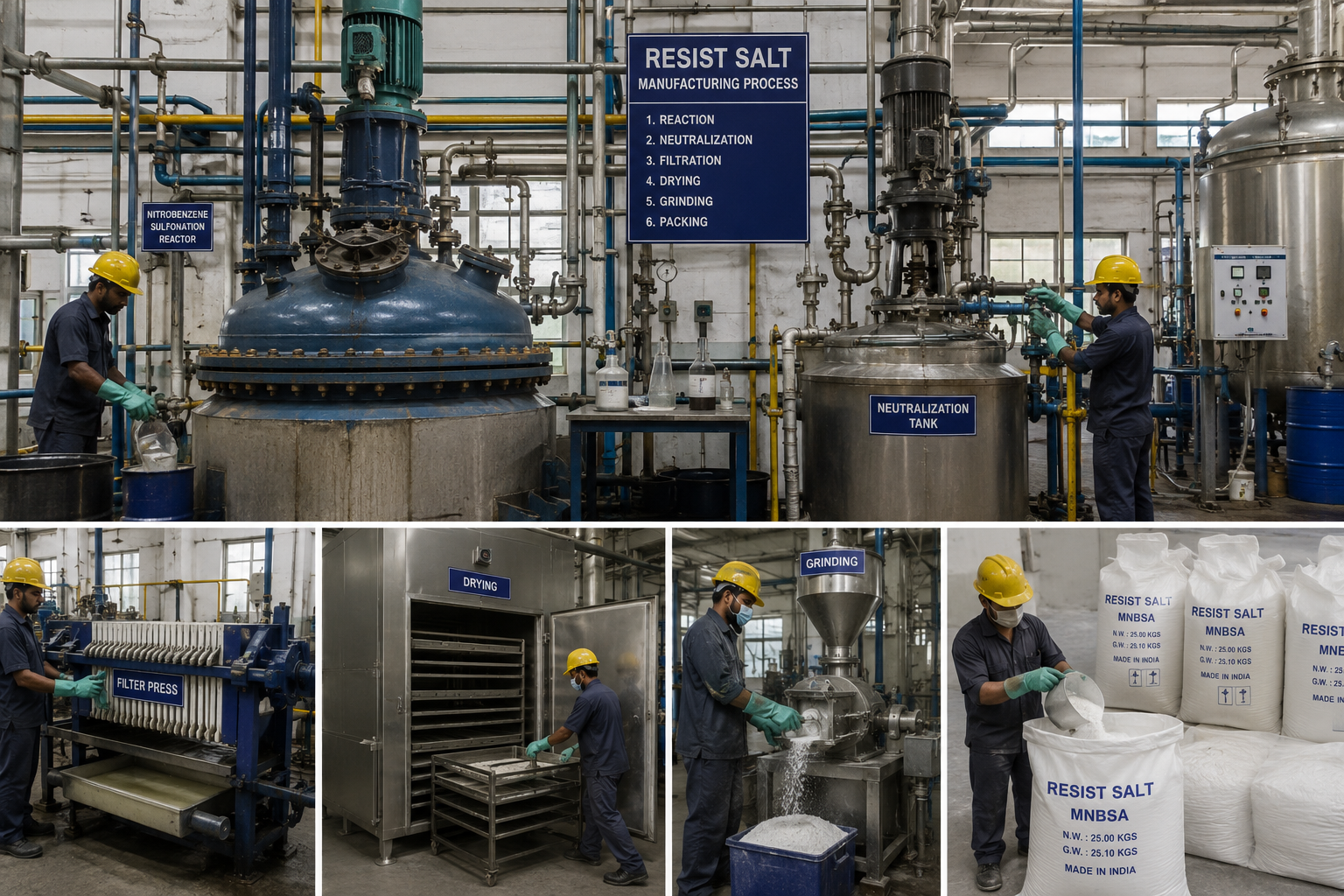
Manufacturing Process of Resist Salt
The quality of Resist Salt depends on the manufacturing process, raw material purity, and strict quality control. Leading Resist Salt manufacturers in India use advanced production technology and modern laboratory testing to ensure every batch meets international textile industry standards.
The manufacturing process begins with carefully selected raw materials that undergo controlled chemical reactions under monitored temperature and pressure conditions. After synthesis, the product is filtered, purified, dried, and converted into a free-flowing yellow crystalline powder. Every production batch is tested before packaging to ensure consistent performance in textile dyeing and printing applications.
Modern manufacturing facilities also follow environmental and safety regulations to minimize waste generation while maintaining high production efficiency. Automated production lines help achieve uniform particle size, consistent purity, and reliable product quality for export markets.
Technical Specifications of Resist Salt
Although specifications may vary depending on customer requirements, export-quality Resist Salt generally meets the following standards.
| Parameter | Specification |
|---|---|
| Product Name | Resist Salt |
| Chemical Name | Sodium Meta Nitro Benzene Sulphonate |
| CAS Number | 127-68-4 |
| Appearance | Yellow Crystalline Powder |
| Solubility | Completely Soluble in Water |
| Purity | Industrial Grade |
| Moisture | As Per Standard Specification |
| Application | Textile Dyeing & Printing |
| Shelf Life | 24 Months |
Buyers should always request the latest Certificate of Analysis (COA), Safety Data Sheet (SDS), and Technical Data Sheet (TDS) before placing bulk orders.
Quality Standards Followed by Indian Manufacturers
Quality plays a crucial role in the textile chemical industry. Even minor variations in chemical composition can affect dyeing performance and fabric quality. Reliable Resist Salt manufacturers maintain strict quality control procedures throughout production.
Every batch undergoes laboratory testing to verify appearance, purity, solubility, moisture content, pH value, and oxidation efficiency. This ensures consistent performance across different dyeing processes and textile applications.
Many export-oriented manufacturers also comply with internationally recognized quality management systems such as ISO 9001 and maintain proper documentation for global shipments.
Typical Quality Documents Provided
- Certificate of Analysis (COA)
- Safety Data Sheet (SDS/MSDS)
- Technical Data Sheet (TDS)
- Packing List
- Commercial Invoice
- Certificate of Origin (if required)
- Bill of Lading
Packaging Options for Export
Proper packaging protects Resist Salt from moisture, contamination, and physical damage during transportation. Export packaging is designed to maintain product quality throughout international shipping.
Common export packaging options include:
- 25 KG HDPE Bags
- 25 KG Laminated Bags
- 50 KG Industrial Bags
- Jumbo Bags (500 KG – 1000 KG)
- Customized Private Label Packaging
- Palletized Export Packaging
Packaging can be customized according to buyer requirements, destination country regulations, and container loading plans.
Storage and Shelf Life
Resist Salt should be stored in a cool, dry, and well-ventilated warehouse away from direct sunlight and moisture. Bags should remain tightly sealed until use to prevent contamination.
Under recommended storage conditions, Resist Salt generally maintains its chemical stability and performance for up to 24 months from the date of manufacture.
Bangladesh Textile Industry and Demand for Resist Salt
Bangladesh is one of the world's leading garment manufacturing countries and a major exporter of ready-made garments (RMG). Thousands of textile processing units operate throughout the country, producing fabrics for international brands across Europe, North America, and Asia.
The country's textile sector depends heavily on imported specialty chemicals because domestic production is limited. Resist Salt is widely used in reactive dyeing and textile printing processes by dye houses, fabric processors, and garment washing units.
Growing exports of knitwear, woven fabrics, home textiles, and denim continue to increase the demand for high-quality textile auxiliaries. This creates significant opportunities for Indian Resist Salt exporters serving Bangladesh.
Major Textile Manufacturing Cities in Bangladesh
- Dhaka
- Gazipur
- Narayanganj
- Chattogram (Chittagong)
- Tongi
- Cumilla
- Mymensingh
- Savar
These industrial regions host hundreds of textile mills, dyeing units, and garment factories that regularly purchase textile chemicals from international suppliers.
Why Import Resist Salt from India?
India has become the preferred sourcing destination for Resist Salt due to its advanced manufacturing capabilities, competitive pricing, and efficient logistics. Buyers from Bangladesh benefit from shorter transit times, lower freight costs, and easier communication with Indian exporters.
Key Advantages
- Competitive pricing compared to many global suppliers
- Consistent product quality
- Bulk manufacturing capacity
- Fast delivery to Bangladesh
- Experienced export documentation support
- Flexible packaging options
- Reliable supply chain
- Technical assistance for textile applications
How to Select the Right Resist Salt Supplier
Choosing the right supplier is essential for maintaining consistent textile production. Buyers should evaluate suppliers based on product quality, manufacturing capability, export experience, documentation, logistics support, and after-sales service.
A reliable supplier should provide transparent communication, timely shipment updates, competitive pricing, and complete technical documentation. Long-term supply agreements can also help buyers secure stable pricing and uninterrupted availability.
Checklist Before Purchasing
- Verify manufacturing capability
- Request COA and SDS
- Check export experience
- Confirm packaging standards
- Review delivery timelines
- Compare pricing and payment terms
- Evaluate customer support
- Request product samples if required
Export Markets for Indian Resist Salt
Indian Resist Salt is exported to textile manufacturers across the globe. In addition to Bangladesh, major export destinations include Pakistan, Vietnam, Indonesia, Turkey, Egypt, Sri Lanka, Thailand, China, the United Arab Emirates, South Africa, and several European countries.
The growing textile industries in Asia and Africa continue to drive demand for reliable textile chemicals, making India a strategic sourcing hub for international buyers.
Safe Handling and Storage of Resist Salt
Although Resist Salt is widely used in textile processing, it should always be handled according to recommended industrial safety practices. Proper handling ensures worker safety, maintains product quality, and minimizes environmental impact.
Personnel should wear appropriate personal protective equipment (PPE), including safety gloves, protective eyewear, dust masks, and work clothing when handling the product. Avoid direct contact with skin and eyes, and ensure adequate ventilation in storage and production areas.
Resist Salt should be stored in a cool, dry, and well-ventilated warehouse, away from direct sunlight, moisture, incompatible chemicals, and sources of heat. Always keep bags tightly sealed when not in use to prevent contamination and moisture absorption.
Safety Recommendations
- Use gloves and safety goggles while handling.
- Avoid inhalation of dust.
- Store in original sealed packaging.
- Keep away from food and drinking water.
- Follow local chemical handling regulations.
- Refer to the Safety Data Sheet (SDS) before use.
Shipping and Export Logistics
India's well-developed port infrastructure makes it one of the most efficient countries for exporting textile chemicals. Resist Salt is commonly shipped from major ports such as Mundra, Nhava Sheva (JNPT), Hazira, Kandla, and Chennai to buyers across Asia, Africa, Europe, and the Middle East.
For Bangladesh, shipments are transported through both sea freight and land routes, depending on buyer requirements, order quantity, and delivery timelines. Short transit times and competitive freight costs make India an ideal sourcing destination for Bangladeshi textile manufacturers.
Common Export Packaging
- 25 KG HDPE Bags
- 25 KG Laminated Woven Bags
- 50 KG Industrial Bags
- 500 KG Jumbo Bags
- 1000 KG FIBC Bags
- Customized Private Label Packaging
Export Documentation
Professional exporters provide complete documentation to ensure smooth customs clearance and international compliance. Proper documentation reduces delays and helps buyers receive shipments without unnecessary complications.
Documents Provided
- Commercial Invoice
- Packing List
- Certificate of Analysis (COA)
- Safety Data Sheet (SDS/MSDS)
- Technical Data Sheet (TDS)
- Certificate of Origin (if required)
- Bill of Lading / Airway Bill
- Insurance Documents (if applicable)
- Export Declaration
Why Global Buyers Choose Indian Resist Salt Manufacturers
India has earned a strong reputation in the global chemical industry for manufacturing high-quality textile chemicals at competitive prices. With advanced manufacturing technology, experienced technical teams, and robust export infrastructure, Indian suppliers serve textile industries across more than 100 countries.
Global buyers benefit from reliable product quality, flexible packaging options, timely deliveries, responsive customer support, and extensive export experience. These advantages make India one of the preferred sourcing destinations for Resist Salt and other textile auxiliaries.
Advantages of Sourcing from India
- Competitive international pricing
- Large-scale production capacity
- Consistent product quality
- Fast export logistics
- Experienced export documentation
- Flexible order quantities
- Reliable technical support
- Long-term supply capability
Why Choose Nine International?
Nine International is a trusted exporter and supplier of industrial chemicals and textile auxiliaries based in Ahmedabad, Gujarat, India. With years of experience in international trade, we supply high-quality Resist Salt to textile manufacturers, dyeing units, chemical distributors, and industrial buyers worldwide.
We understand that every textile manufacturer requires consistent quality, reliable delivery, and responsive customer service. Our experienced export team works closely with buyers to provide customized packaging, competitive pricing, and complete documentation for hassle-free international shipments.
What We Offer
- Premium Quality Resist Salt
- Competitive Export Pricing
- Bulk Supply Capability
- Customized Packaging
- Fast Delivery
- Export Documentation Support
- Technical Assistance
- Responsive Customer Service
Frequently Asked Questions (FAQs)
1. What is Resist Salt used for?
Resist Salt is mainly used in reactive textile dyeing and printing to prevent the reduction of dyes, ensuring brighter shades, uniform dyeing, and improved color fastness.
2. What is the chemical name of Resist Salt?
The chemical name of Resist Salt is Sodium Meta Nitro Benzene Sulphonate (SMBS).
3. What is the CAS Number of Resist Salt?
The CAS Number of Resist Salt is 127-68-4.
4. Which industries use Resist Salt?
Resist Salt is widely used in textile dyeing mills, textile printing units, garment manufacturers, dye manufacturers, and fabric processing industries.
5. Does Bangladesh import Resist Salt from India?
Yes. Bangladesh imports significant quantities of Resist Salt and other textile chemicals from India due to competitive pricing, reliable quality, and shorter transportation times.
6. Is Resist Salt water soluble?
Yes. Resist Salt is completely soluble in water, making it suitable for various textile processing applications.
7. What packaging options are available?
Resist Salt is commonly supplied in 25 KG bags, 50 KG bags, jumbo bags, and customized export packaging based on customer requirements.
8. What documents are provided with export shipments?
Export shipments typically include a Commercial Invoice, Packing List, Certificate of Analysis (COA), Safety Data Sheet (SDS), Technical Data Sheet (TDS), and other documents required for customs clearance.
9. How should Resist Salt be stored?
Store Resist Salt in a cool, dry place away from moisture and direct sunlight. Keep the packaging tightly sealed until use.
10. How can I request a quotation?
You can contact Nine International with your required quantity, destination country, packaging preference, and technical requirements to receive a customized quotation.
Conclusion
Resist Salt is an essential specialty chemical that plays a critical role in modern textile dyeing and printing. Its ability to prevent dye reduction, improve color consistency, and enhance production efficiency makes it indispensable for textile manufacturers worldwide.
As one of the leading manufacturing hubs for textile chemicals, India continues to supply high-quality Resist Salt to buyers across Bangladesh, Asia, Africa, the Middle East, and other global markets. By partnering with an experienced exporter, buyers can benefit from reliable quality, competitive pricing, timely delivery, and comprehensive export support.
If you are looking for a trusted Resist Salt Manufacturer in India, experienced Resist Salt Exporter, or dependable Resist Salt Supplier for Bangladesh, Nine International is ready to support your sourcing requirements with premium-quality products and professional export services.
Contact Nine International
Nine International
Ahmedabad, Gujarat, India
- Email: info@nineinternational.in
- WhatsApp: +91 99249 35798
- Products: Resist Salt, Dye Intermediates, Textile Chemicals, Industrial Chemicals, Agro Chemicals
- Export Markets: Bangladesh, Vietnam, Turkey, Pakistan, Egypt, UAE, Indonesia, Africa, Europe, and other international destinations.
Request a quotation today and partner with a reliable Indian exporter for high-quality Resist Salt at competitive international prices.