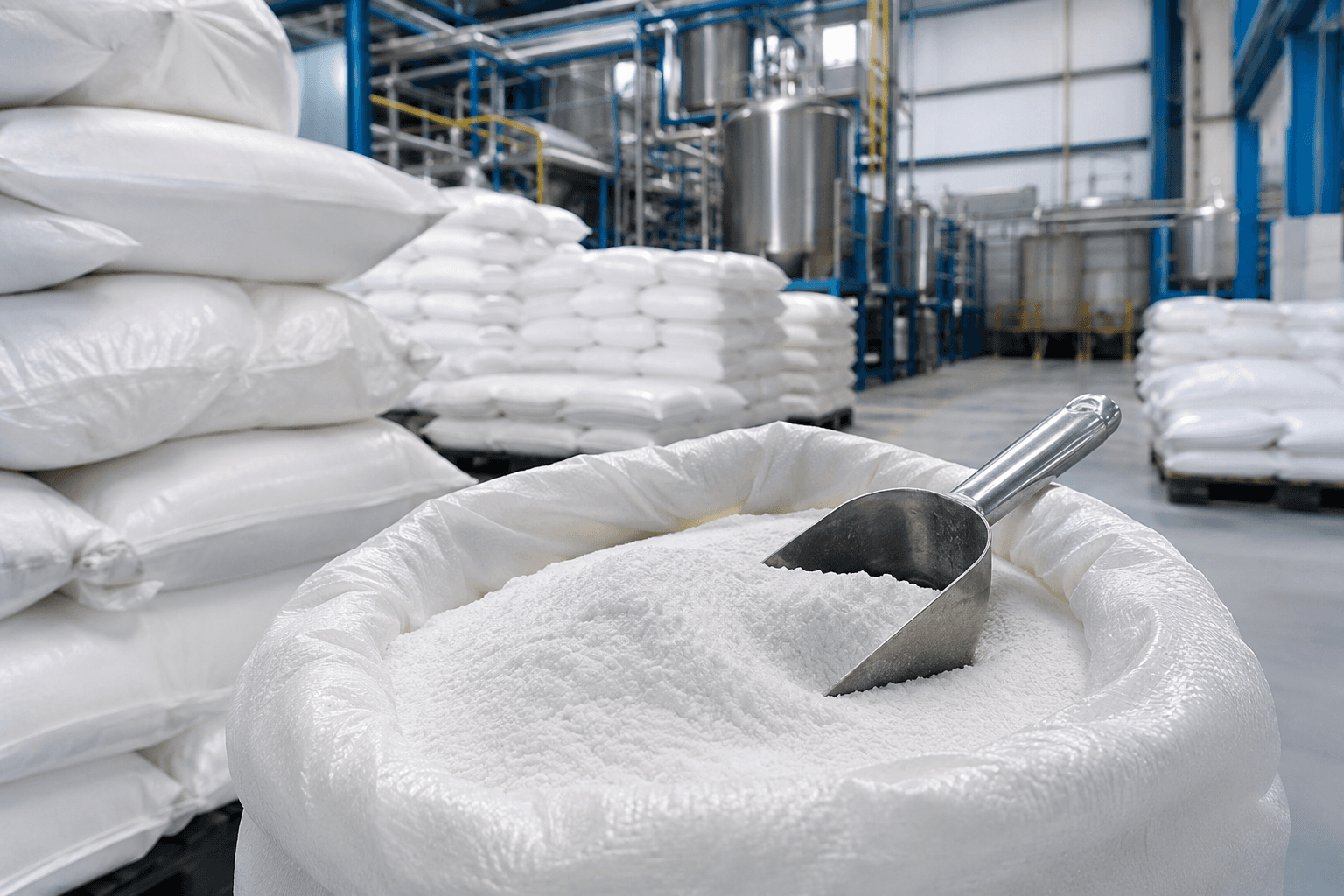
Resist Salt Exporter in India: The Complete Guide for International Buyers
Sourcing industrial chemicals across borders is never just about price — it's about consistency, documentation, and finding a partner who understands what an overseas buyer actually needs at the port of loading and the port of discharge. If you are searching for a reliable Resist Salt exporter in India, this guide walks through everything you need to evaluate a supplier properly, understand the product itself, and know exactly what to ask before you commit to an order.
Nine International, based in GIDC Vatva, Ahmedabad, Gujarat, is one such supplier serving domestic and international buyers of Resist Salt and related industrial chemicals. Throughout this guide, we'll explain both the product and what a genuine export-ready partner looks like — using Nine International as a working example of the standards buyers should expect.
What Is Resist Salt?
Resist Salt is the common trade name for Meta Nitrobenzene Sulphonic Acid, Sodium Salt — CAS Number 127-68-4. It is also known commercially as Ludigol, MNBS, or Sodium Meta Nitro Benzene Sulphonate, depending on the region and industry using it.
Physically, Resist Salt is a white to off-white crystalline or granular powder, highly soluble in water (roughly 359 g/l at 20°C), with a molecular weight of approximately 225 g/mol (as the sulphonic acid sodium salt form; some technical sheets reference the base compound at 58.44 g/mol depending on the exact derivative referenced — always confirm the exact specification sheet with your supplier before ordering).
Core Function
Resist Salt works primarily as a mild oxidizing agent. In textile applications, it prevents unwanted reduction of dyes during steaming and drying, which is what makes it so valuable in resist-printing and reactive dyeing processes — it "protects" certain dyed areas from being altered by adjacent chemical reactions, allowing for sharp, clean pattern definition on fabric.
Industrial Applications of Resist Salt
Resist Salt is not a single-industry chemical. Export buyers typically fall into one of the following categories:
1. Textile Dyeing & Printing
This is the largest application segment. Resist Salt is used to:
- Prevent dye migration between adjacent printed areas
- Improve shade uniformity across large fabric batches
- Achieve sharp, well-defined patterns in resist and discharge printing
- Work compatibly with both reactive and vat dyes
It is widely used on cotton, rayon, viscose, and various blended fabrics, making it a staple input for textile processing units and dye houses across garment-manufacturing economies.
2. Dye & Chemical Intermediate Manufacturing
Resist Salt serves as a key intermediate in the synthesis of several dye classes, including amino-anthraquinone dyes. Dye manufacturers use it as a raw material input rather than a finishing agent.
3. Electroplating
In electroplating processes, Resist Salt functions as an oxidizing agent, helping control the plating bath chemistry and improve the consistency of the metal finish.
4. Other Industrial Uses
Some technical grades of Resist Salt find limited use in specialty chemical formulations where a controlled, mild oxidizing agent is required. Buyers in these segments should always confirm grade suitability directly with their supplier's technical team.
Why India Continues to Lead Global Resist Salt Exports
India is consistently ranked among the top three global exporters of Resist Salt, alongside China and Germany. Several structural factors explain this:
Established Chemical Manufacturing Clusters
Gujarat — particularly industrial belts like Vatva, Ankleshwar, Vapi, and Vadodara — houses one of the densest concentrations of dye-intermediate and specialty chemical manufacturers in the world. This clustering creates efficient raw material sourcing, shared infrastructure, and competitive production economics that get passed on to export buyers.
Cost-Competitive, Quality-Consistent Production
Labor costs, energy access, and decades of process refinement allow Indian manufacturers to produce Resist Salt at export-competitive prices without compromising on purity — typically 96% minimum for standard commercial grades.
Mature Export Compliance Culture
Because India has exported dye intermediates for decades, most serious manufacturers are well versed in:
- HSN code classification for customs
- Preparing COA, TDS, and MSDS documentation
- Packaging standards suited for sea and air freight
- Communicating in the technical language international buyers expect
Strong and Growing Demand Base
Global textile manufacturing hubs — Bangladesh, Turkey, Indonesia, Vietnam, and parts of Africa — continue to expand their garment and dyeing capacity, which directly drives sustained import demand for Resist Salt from Indian suppliers.
How to Evaluate a Resist Salt Exporter in India
Not every listing you find on a B2B directory represents an actual manufacturer or export-ready supplier. Many are trading intermediaries with limited technical support or inconsistent supply. Before committing to a vendor, buyers should check the following:
1. Purity, Grade & Specification Match
Ask specifically:
- What is the minimum guaranteed purity (commonly 96%)?
- Is the product available in powder, granular, or wet form?
- Does the specification sheet match your intended application (textile vs. electroplating vs. dye synthesis)?
A credible exporter will have a documented Specification Sheet and Technical Data Sheet (TDS) ready to share on request — not just a generic product description.
2. Full Documentation Support
For smooth customs clearance and internal quality checks, always request:
- Certificate of Analysis (COA) — batch-specific test results
- Technical Data Sheet (TDS) — standard product specifications
- Material Safety Data Sheet (MSDS) — safety, handling, and storage guidance
- Any relevant ISO or quality certifications
If a supplier hesitates to provide these before shipment, treat that as a red flag.
3. Packaging Suitable for Export
Standard export packaging for Resist Salt typically includes:
- 25 kg or 50 kg multi-layer paper or HDPE bags
- Palletized loading for container shipments
- Moisture-proof lining, since the product is highly water-soluble and hygroscopic in humid transit conditions
Buyers with recurring large-volume needs should also ask about customized packaging options and whether the supplier can accommodate specific labeling requirements for the destination country.
4. Real Export Experience — Not Just Domestic Supply
Ask direct questions:
- Which countries have you shipped to previously?
- What incoterms do you typically work with (FOB, CIF, CFR)?
- Which Indian port do you typically ship from (Mundra, Nhava Sheva, Pipavav)?
A supplier with genuine, ongoing export activity will answer these without hesitation.
5. Sample Policy & Responsiveness
Reliable exporters generally offer:
- Pre-shipment samples for quality verification
- Fast, technically accurate responses to buyer queries
- Clear communication on lead times and minimum order quantities (MOQs)
Slow or vague communication at the inquiry stage is often a preview of how supply issues will be handled later.
Resist Salt Specifications: What Buyers Should Expect
| Parameter | Typical Value |
|---|---|
| Chemical Name | Meta Nitrobenzene Sulphonic Acid, Sodium Salt |
| CAS Number | 127-68-4 |
| Common Trade Name | Resist Salt / Ludigol |
| Appearance | White to off-white crystalline/granular powder |
| Purity | 96% minimum (standard commercial grade) |
| Solubility | Highly soluble in water |
| Packaging | 25 kg / 50 kg bags (customizable) |
| Shelf Life | Typically 2 years under proper storage |
| Storage | Cool, dry, sealed containers away from moisture |
Always request the exact specification sheet from your supplier, since minor formulation differences (grade, concentration, and form) can affect suitability for your specific process.
Safety & Handling Guidelines
Resist Salt is generally considered manageable with standard industrial chemical safety practices, but buyers and their downstream handling teams should always follow supplier-provided MSDS instructions, which typically include:
- Avoiding inhalation of dust during handling
- Using gloves, goggles, and appropriate protective clothing
- Working in well-ventilated areas
- Avoiding contact with eyes and skin
- Storing in dry, sealed containers away from moisture and incompatible substances
- Following all local regulatory requirements for storage and transport in the destination country
A trustworthy exporter will proactively share MSDS documentation rather than waiting to be asked after the order is placed.
Shipping & Logistics Considerations for International Buyers
When importing Resist Salt from India, a few logistics factors matter beyond just unit pricing:
Incoterms — Clarify whether your quote is FOB (Free on Board), CIF (Cost, Insurance, Freight), or CFR (Cost and Freight), as this significantly affects your landed cost calculations.
Port of Loading — Gujarat-based exporters commonly ship via Mundra or Nhava Sheva (JNPT), both of which offer strong container freight connectivity to major global routes.
HSN Code & Customs Documentation — Confirm the correct HSN classification is used on your shipping documents to avoid customs delays at the destination port.
Lead Time — Standard production and dispatch timelines vary based on order volume; always confirm lead time in writing before finalizing purchase terms, particularly for larger container-load orders.
Payment Terms — Common structures include advance payment, LC (Letter of Credit), or a partial advance with balance against shipping documents — negotiate terms that suit both parties' risk tolerance.
About Nine International — Resist Salt Exporter, Ahmedabad, Gujarat
Nine International operates out of Plot No. 117, Phase – II, Opp. Meghmani Dyes & Intermediates, GIDC Vatva, Ahmedabad – 382445, Gujarat, India — placing it directly within one of Gujarat's most established industrial chemical zones, alongside major dye and intermediate manufacturers.
Being located in GIDC Vatva offers practical advantages that matter to buyers:
- Proximity to raw material suppliers and allied chemical manufacturers
- Established regional logistics infrastructure for both domestic dispatch and port-bound export shipments
- A long-standing industrial ecosystem experienced in handling dye-intermediate and specialty chemical products
For buyers evaluating Resist Salt suppliers from this region, Nine International can be reached directly for technical specifications, sample requests, or export quotations:
Contact Person: Krunal Panchal
Office Address: Plot No. 117, Phase – II, Opp. Meghmani Dyes & Intermediates, GIDC Vatva, Ahmedabad – 382445, Gujarat, India
Email: info@nineinternational.in
Phone: +91 99249 35798
Buyers are encouraged to reach out directly with their required purity grade, order quantity, destination port, and intended application, so the team can respond with an accurate specification sheet and export quote.
Frequently Asked Questions
1. What is the CAS number of Resist Salt?
Resist Salt is identified by CAS Number 127-68-4, chemically known as Meta Nitrobenzene Sulphonic Acid, Sodium Salt.
2. Is Resist Salt the same as Ludigol?
Yes. Ludigol is a common commercial/trade name used for Resist Salt in several markets, particularly in textile printing applications.
3. What packaging sizes are available for export orders?
Standard export packaging is typically 25 kg or 50 kg bags, with customized packaging available for larger bulk or container-load orders — confirm directly with your supplier.
4. Which fabrics is Resist Salt commonly used with?
It is widely used on cotton, rayon, viscose, and various blended fabrics in resist dyeing and printing processes.
5. What documentation should I request before importing Resist Salt from India?
Always request a Certificate of Analysis (COA), Technical Data Sheet (TDS), and Material Safety Data Sheet (MSDS) for the specific batch you intend to purchase.
6. What is the typical minimum purity for commercial-grade Resist Salt?
Most commercial-grade Resist Salt is supplied at 96% minimum purity, though this can vary — always confirm against your application's tolerance requirements.
7. Which ports do Gujarat-based exporters typically use?
Gujarat-based suppliers, including those in the Ahmedabad region, commonly ship through Mundra Port or Nhava Sheva (JNPT), both of which offer strong international container connectivity.
8. How can I request a sample or quote from Nine International?
You can contact Krunal Panchal directly via email at info@nineinternational.in or by phone at +91 99249 35798, providing your required grade, quantity, and destination for a tailored quote.
Final Thoughts
Choosing the right Resist Salt exporter in India comes down to more than comparing unit prices across directory listings. Purity consistency, complete documentation, export experience, and responsive communication are what separate a dependable long-term supplier from a one-time transaction risk. Gujarat's established industrial base — and Ahmedabad's GIDC Vatva zone specifically — continues to be a strong sourcing region for buyers worldwide, supported by suppliers like Nine International who combine industrial-zone proximity with export-ready documentation practices.
For technical specifications, sample requests, or a customized export quote for Resist Salt, reach out to Nine International:
📍 Plot No. 117, Phase – II, Opp. Meghmani Dyes & Intermediates, GIDC Vatva, Ahmedabad – 382445, Gujarat, India