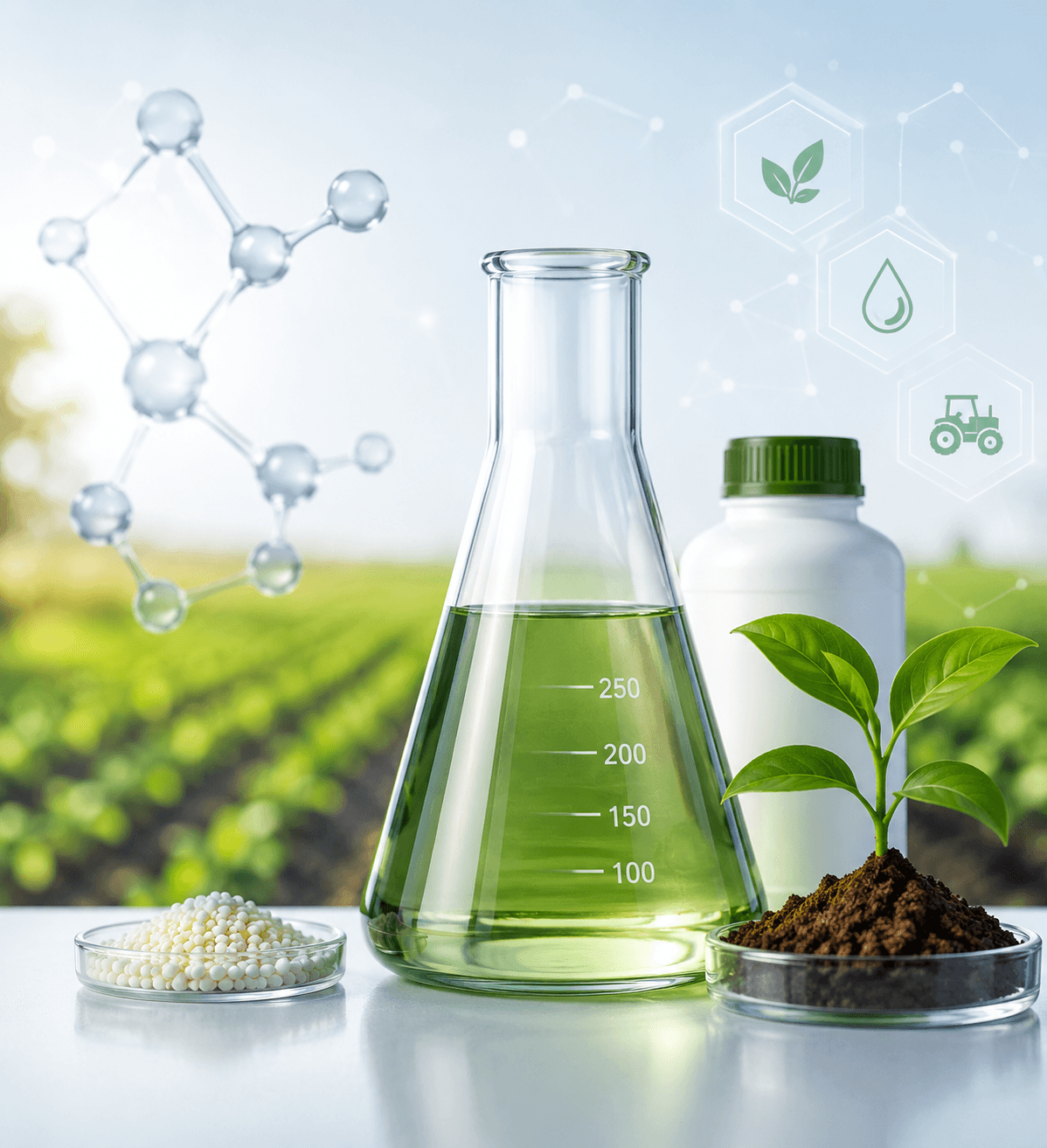
What Are Agro Chemicals?
Agri chemicals, also known as agricultural chemicals or agrochemicals, are chemical substances used in farming and crop production to enhance plant growth, protect crops from pests and diseases, and improve soil health. They are among the most critical inputs in modern agriculture and play a central role in ensuring global food security.
Without agri chemicals, global food production would decline by an estimated 40 to 60 percent. As the world population grows toward 10 billion by 2050, the demand for high-yield, reliable crop production continues to rise — and agricultural chemicals remain at the heart of meeting that demand.
The global agrochemicals market was valued at over USD 270 billion in 2024 and is projected to grow at a steady CAGR of 4.5% through 2030. India alone exports over USD 4 billion worth of agri chemicals annually to more than 130 countries, making it the fourth-largest agrochemical producer in the world.
Types of Agri Chemicals
Agricultural chemicals are broadly divided into several categories based on their function in the crop production cycle. Understanding each type helps farmers and buyers make informed sourcing decisions.
1. Fertilizers
Fertilizers are the most widely used agri chemicals globally. They replenish soil nutrients that crops absorb during each growing season. Without regular fertilization, soil becomes depleted and yields fall sharply over time. The three primary macronutrients provided by fertilizers are Nitrogen (N), Phosphorus (P), and Potassium (K) — commonly referred to as NPK.
- Nitrogen fertilizers such as Urea (46% N) and DAP promote leaf growth and chlorophyll production.
- Phosphorus fertilizers such as SSP and TSP support root development, flowering, and seed formation.
- Potassium fertilizers such as MOP and SOP strengthen cell walls and improve drought resistance.
Micronutrient fertilizers containing Zinc, Boron, Iron, and Manganese are equally important. Zinc deficiency alone affects over 50% of soils in India and Southeast Asia.
2. Pesticides and Insecticides
Pesticides are crop protection chemicals used to control insects, fungi, weeds, and other organisms that damage crops. Insecticides specifically target harmful insects such as aphids, bollworms, and locusts. Common active ingredients include Chlorpyrifos, Imidacloprid, Lambda-cyhalothrin, and Spinosad. Modern systemic insecticides are absorbed by the plant and provide prolonged, internal protection.
3. Herbicides
Herbicides are used to control weeds that compete with crops for nutrients, water, sunlight, and space. Pre-emergent herbicides prevent weed germination before they appear; post-emergent herbicides eliminate existing weeds. Glyphosate remains the most widely used herbicide globally, though newer low-residue alternatives are gaining significant market share in export-focused agriculture.
4. Fungicides
Fungal pathogens cause diseases like wheat rust, rice blast, and grape downy mildew — each capable of devastating entire harvests. Fungicides prevent and treat these infections. Triazole-based and strobilurin fungicides are among the most commonly exported agri chemicals from India.
5. Plant Growth Regulators
Plant growth regulators (PGRs) are specialty agri chemicals that influence the hormonal activity of plants. They are used to control growth rates, improve fruit set, delay or accelerate ripening, and increase uniformity in flowering. PGRs are widely used in cotton, sugarcane, and horticultural crops.
6. Nematicides
Nematicides control soil-dwelling nematodes that attack plant roots and drastically reduce the uptake of water and nutrients. They are particularly important for vegetable, tobacco, and banana crops where root-knot nematodes cause significant yield loss.
India: The World's Agri Chemical Export Hub
India has emerged as one of the world's most trusted sources of agricultural chemicals. The country produces over 400 active ingredients for crop protection and exports to more than 130 countries. Here is why global buyers prefer sourcing agri chemicals from India:
- Cost advantage: Manufacturing costs in India are 40–60% lower than in the USA or Europe.
- Technical expertise: India has a large pool of qualified chemical engineers and agronomists.
- Regulatory compliance: Leading Indian manufacturers follow ISO 9001, WHO-GMP, and EPA-equivalent standards.
- Industrial clusters: Gujarat (GIDC Vatva, Ankleshwar), Maharashtra, and Andhra Pradesh are the leading production zones.
- Export reach: India's strategic location enables fast, cost-effective shipping to Africa, Southeast Asia, the Middle East, Europe, and the Americas.
India's top agri chemical export destinations include the United States (18%), Africa (20%), Brazil (14%), and Europe (16%).
Applications by Crop Type
Different crops have distinct agri chemical requirements. Cereal crops like wheat and rice require high nitrogen during vegetative growth and fungicide protection at flowering. Cash crops like cotton use intensive insecticide programs against bollworm. Horticultural crops — fruits and vegetables — rely heavily on fungicides and micronutrient foliar sprays to ensure quality and shelf life for export.
Oilseed crops such as groundnut and soybean benefit greatly from phosphorus and potassium fertilizers combined with bio-inoculants for biological nitrogen fixation.
Safe Handling of Agricultural Chemicals
Responsible use of agri chemicals is essential to protect human health and the environment. Always follow label instructions for dosage, dilution, and application timing. Wear appropriate personal protective equipment (PPE) including gloves, masks, and goggles. Store chemicals in original containers in cool, dry, locked facilities away from food and water. Observe buffer zones near water bodies and residential areas. Follow the Maximum Residue Limits (MRLs) for your export destination — particularly the EU and US markets which have stringent requirements.
In India, agri chemicals are regulated under the Insecticides Act 1968 and governed by the Central Insecticides Board and Registration Committee (CIBRC).
How to Source Quality Agri Chemicals from India
When sourcing agri chemicals internationally, choosing the right export partner is as important as the product itself. Look for suppliers who offer ISO certifications, complete technical documentation (COA, SDS, TDS), UN-approved export packaging, and proven global export experience.
Nine International, based in GIDC Vatva, Ahmedabad — Gujarat's premier chemical industrial zone — has over 20 years of experience sourcing and exporting industrial and specialty chemicals to global markets. We serve buyers across 4+ international markets with competitive pricing, consistent quality, and end-to-end export support from inquiry to doorstep delivery.
Contact us today via WhatsApp at +91 99249 35798 or email info@nineinternational.in to request a quote for your agri chemical requirements.